Solitaire
- 4.5
- Rating
- 10.00M
- Installs
- Free
- Price
 Analysis by App-foxy
I keep coming back to Solitaire because it asks very little from me while still giving my attention somewhere useful to go. Mouse Games’ card game is a straightforward take on the familiar one-player patience format: easy to begin, difficult to master consistently, and comfortable in short sessions. After spending time with it, my main conclusion is simple: this is a dependable casual card game rather than a feature-heavy gaming destination. That focus is its biggest strength, although it also explains why some players may eventually want something more ambitious.
The game is free, available for everyone, and belongs firmly in the classic card-game corner of Android. Its scale is also hard to ignore: it has passed 10 million installs, with an average rating of 4.6 from roughly 223 thousand ratings. Those numbers do not prove that every player will enjoy it, but they do match my impression that the basic experience is familiar, accessible, and easy to recommend to someone who simply wants Solitaire without a complicated learning curve.
Why this version works so well for quick card sessions
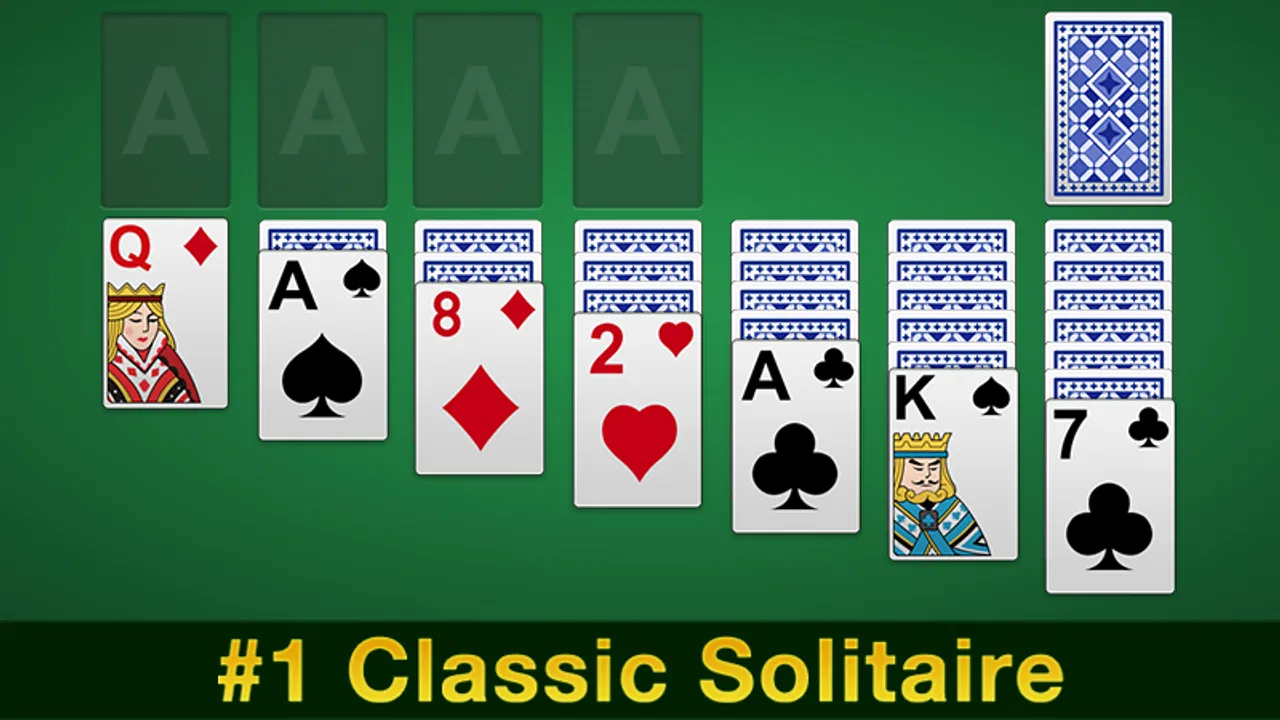
The appeal starts with the rules. If you already know the usual Solitaire layout, you can begin playing almost immediately. If you do not, the structure is still approachable because the objective is visible on the table: arrange cards by alternating colors in descending order, expose hidden cards, and build the four final suits from their lowest cards upward. That combination gives each move a clear purpose without turning the game into a lesson.
You May Also Like

 Blood Strike: 2.5 Anniversary
Blood Strike’s Loadouts Turn Every Drop Into a Tactical Gamble
A close look at Blood Strike’s custom loadouts: how fast access to signature weapons reshapes its battle royale rhythm, rewards preparation, and narrows the gap between fights.

 Pandora - Music & Podcasts
Pandora’s Music Is Easy to Start, but Harder to Recover
Pandora’s strength is its low-effort path from a seed to a station. Its weak spot is how much confidence it asks you to place in connection, setup, and quiet recovery.

 8 Ball Pool
 Is Built on Rivalries, Rematches, and Routine
A close look at the rivalries, rematches, shared routines, and unanswered safety questions that turn a quick pool match into a persistent mobile community.

 Samsung Music
’s Quiet Strength Is Playing What You Already Own
Its reach comes less from spectacle than from dependable access to a personal library. That simplicity is both the app’s strongest retention engine and its ceiling.

 AccuWeather: Weather Radar
AccuWeather Review: A Quick, Clear Forecast for Everyday Decisions
For everyday plans, the best forecast is the one you can understand quickly. AccuWeather makes rain timing, radar, and local conditions easy to act on, with a few trade-offs.

 Hill Climb Racing
Why Hill Climb Racing Still Turns Crashes Into One More Run
A tiny car, a bumpy hill and one more upgrade: Hill Climb Racing keeps resurfacing because its simple chaos makes every near-miss feel personal.
More From Our News Desk



In my experience, the best part is the rhythm between obvious moves and small moments of uncertainty. You may have a red six that can move onto a black seven, but the more important decision is often whether that move reveals a hidden card or blocks a useful column. The game therefore rewards attention more than speed. I can play casually, yet I still feel responsible for the outcome instead of merely tapping through an automatic sequence.
That makes it a good companion for everyday gaps in the day. I would use it while waiting for a meeting to begin, during a short commute when I am not driving, or when I want a quiet break from social feeds. A typical session can start with the intention of playing only one hand, then continue because the previous layout ended just short of completion. The experience does not demand voice chat, coordination with other people, or a long uninterrupted commitment.
The developer, Mouse Games, has kept the identity of the product clear. It is not presented as a collection of unrelated card modes or as a competitive platform. It is a Solitaire game, and that narrow purpose helps the interface feel less intimidating than many modern mobile games. For a player who wants to open an app, deal a hand, and think through the next move, that restraint is valuable.
The learning curve is gentle, but the decisions are not empty
New players should pay attention to card exposure rather than moving every available card immediately. A legal move is not automatically a useful move. If moving a card creates an empty column, that space can be valuable because only a king can occupy it in the standard arrangement. I have found that preserving flexibility is usually more important than making the table look tidy.
One practical habit is to inspect the face-up cards and the stock before committing to a sequence. When several moves are available, I generally prioritize the action that uncovers a face-down card. This is not a guaranteed winning method, but it gives me more information and reduces the chance of spending useful moves on rearranging cards that could have stayed where they were.
Another helpful approach is to avoid sending cards to the foundation simply because they are eligible. Early in a hand, a low card may still be useful in the tableau if it helps uncover another card or supports a longer alternating-color sequence. Later, when the remaining tableau is mostly open, foundation moves become safer. That distinction is one reason the game remains engaging after the rules become familiar: the challenge is not understanding what is allowed, but judging when a legal move is strategically wise.
Players who normally treat Solitaire as a relaxing automatic activity may be surprised by how often a careless tap changes the entire shape of a hand. I appreciate that tension, but it also means the game is not always ideal when I want something completely mindless. It occupies a middle ground between background entertainment and deliberate puzzle solving.
Small-session design makes it easy to keep returning
The strongest use case is repetition in short bursts. I do not need to remember a storyline, manage a character, or rebuild progress after a long absence. Each hand is its own compact problem. That makes the game suitable for people who have only a few minutes available and for players who prefer a familiar routine over constant novelty.
It also works well as a low-pressure way to reset attention. After reading messages or switching between demanding tasks, focusing on card order gives my mind one clear visual problem. I would not call it a replacement for a dedicated concentration exercise, but it can be a pleasant transition between activities. The important point is that the game’s value comes from its repeatable structure, not from a large amount of content.
Because it is free, the barrier to trying it is low. Someone can install it to see whether this style of Solitaire suits them without first committing money. The age rating of Everyone also makes its presentation broadly approachable. I would still recommend that parents consider their own preferences about mobile play, but nothing about the basic card concept requires mature subject matter or specialized knowledge.
The published release date is January 18, 2017, and the current version is 5.8. That long presence gives the game the feel of an established utility rather than a newly launched experiment. It requires Android 4.0 or later, which means compatibility reaches back to older devices. For anyone using an older Android phone or tablet, that can matter more than flashy presentation.
Where the simplicity becomes a real limitation
My main criticism is that the same focus that makes the game approachable can make it feel limited over time. If you want a broad collection of card games, a strong social layer, elaborate challenges, or a sense of long-term progression, this may not hold your attention. It is built around the core Solitaire loop, so players looking for constant unlocks or a changing adventure should choose a different kind of game.
There is also a difference between familiar and fresh. The rules are comforting, but they do not create much surprise once you have played many hands. The enjoyment depends on the quality of the individual decisions and on your personal appetite for repetition. I can appreciate another hand after a busy day, while someone who needs new objectives every few minutes may find the experience too narrow.
Solitaire can also expose the limits of the format itself. Some hands feel satisfying because a careful choice gradually opens the board. Others can become frustrating when the available order leaves little room to recover. That is part of the traditional game, not necessarily a flaw unique to this release, but it is worth knowing before installing. If you dislike losing to a card sequence after making sensible moves, this is unlikely to become a relaxing favorite.
Compared with a physical deck, the app is more convenient and less messy, but it removes the tactile pleasure of handling cards. Compared with a multiplayer card game, it has no need for opponents and no waiting for another person’s turn, yet it also lacks the social tension that makes competitive play exciting. Compared with a large digital card collection, it offers a cleaner purpose but fewer reasons to explore beyond the central format.
That comparison helps clarify who should skip it. I would not choose this version for someone who wants online competition, collectible cards, narrative progression, or a constantly changing set of mechanics. I would also hesitate to recommend it to a player who already owns a Solitaire app they love and expects a dramatically different presentation. The value here is dependable access to the classic experience, not reinvention.
How I approach a difficult hand
When a layout starts to stall, I stop looking only for immediate matches and count the blocked opportunities. A move that exposes a face-down card is often more informative than one that simply extends a visible stack. I also check whether an empty column can be used productively instead of filling it at the first opportunity. Saving that space for a suitable king can create a useful temporary home for an entire sequence.
Stock management matters too. I prefer to remember which cards have already appeared and which useful card may be buried beneath them. If the deal order gives me a choice between two playable cards, I consider which one preserves access to the other. This simple habit makes the game feel less like random tapping and more like managing limited information.
For a calmer session, I set a personal goal that is not always winning. I might try to expose more hidden cards, avoid unnecessary reversals, or finish a hand without rushing foundation moves. That changes the mood when the layout is unfavorable. Instead of treating every loss as wasted time, I can use the hand to practice recognizing which decisions reduced my options.
These habits are especially useful for newcomers because they prevent the most common early mistake: moving cards just because the game permits it. Solitaire rewards planning several steps ahead, but it does not require a complicated system. A quick scan of the tableau, stock awareness, and patience with empty columns are enough to make the experience more satisfying.
Who will get the most from this card game
I would recommend it first to people who want a familiar solo activity with almost no setup. It suits someone who remembers playing Solitaire on a computer, someone returning to card games after a long break, or someone who wants a quiet alternative to endless scrolling. The rules are recognizable, the price is free, and the broad age rating makes it easy to share as a simple recommendation.
It is also a good fit for older Android hardware because the minimum operating-system requirement reaches Android 4.0. That does not guarantee identical performance on every device, but it makes the game relevant to people who are not using the newest phone. The large install base and substantial number of reviews suggest that it has found an audience beyond a small niche, while the focused design keeps the first session uncomplicated.
I would be more selective with experienced card-game players. If you enjoy analyzing probability, this can still provide worthwhile decisions, but you should approach it as a compact traditional game rather than a deep strategy system. If you need rankings, opponents, or a large menu of variants, another app will probably serve you better. The right question is not whether this is the most feature-rich Solitaire option; it is whether you want a clean, repeatable hand of cards.
One practical question is whether it is suitable for very short play. In my view, yes. The game’s structure makes it easy to stop after a hand, and there is no story or multiplayer match demanding that I remain available. Another likely concern is whether beginners can understand it without already knowing the rules. I think most can, provided they take a moment to learn the purpose of the tableau, stock, and foundations rather than tapping randomly.
Players may also wonder whether the game remains worthwhile after the novelty fades. For me, that depends on how much I enjoy repeated puzzles. The long-term appeal is the small variation created by each deal and the satisfaction of improving decisions, not a promise of a continually expanding game world. If that sounds satisfying, it can stay installed for a long time. If not, the narrow scope will become apparent quickly.
My verdict after living with the classic format
Solitaire is a solid recommendation for anyone who wants traditional, one-player card play in a simple mobile form. Mouse Games does not need to overcomplicate the idea: the pleasure comes from revealing cards, protecting options, and finding a route through a difficult layout. The free price, Everyone rating, broad Android compatibility, and established audience make it an easy app to try.
Its weaknesses are equally clear. It is repetitive by design, and it will not satisfy players who expect social competition, rich progression, or a wide library of modes. Some hands can feel restrictive, and the lack of a bigger purpose means your enjoyment rests almost entirely on whether you like Solitaire itself.
I would install it for a quiet break, a familiar mental warm-up, or a dependable game on an older Android device. I would skip it only if I wanted a card app to keep surprising me with new systems or to connect me with other players. For the right audience, that modest ambition is not a problem; it is the reason the game works. It gives me one clear activity, asks me to think just enough, and gets out of the way when the hand is over.
FAQs for Solitaire
01What features does the Solitaire app offer?
The Solitaire app offers a classic card game experience with multiple variations such as Klondike, Spider, and FreeCell. Users can enjoy customizable themes, daily challenges, and a hint system to assist when they're stuck. Additionally, the app often includes statistics tracking to monitor your performance over time.
02Is the Solitaire app available offline?
Yes, the Solitaire app can be played offline, making it a great option for those who want to enjoy the game without an internet connection. This feature is particularly useful for travel or when you have limited data access. However, some features like daily challenges may require an internet connection.
03How user-friendly is the Solitaire app interface?
The Solitaire app boasts a user-friendly interface with intuitive controls. New users will find it easy to navigate through menus and start a game quickly. The app also provides tutorials and a help section for beginners, ensuring a smooth experience for players of all skill levels.
04Are there any in-app purchases or ads in the Solitaire app?
The Solitaire app typically offers a free version supported by ads. Users can opt for an ad-free experience by purchasing a premium version or through in-app purchases. These purchases might also unlock additional features or themes, enhancing the gameplay experience.
05How secure is the Solitaire app?
The Solitaire app is generally considered secure, as it does not require personal information for you to play. However, always ensure you're downloading from reputable sources like the Google Play Store or Apple App Store. Regular updates from the developer also help maintain security and performance.
Pros
- User-friendly interface makes gameplay smooth.
- Multiple game modes keep it interesting.
- Customizable themes enhance visual appeal.
- Offline play available for uninterrupted fun.
- Daily challenges offer rewarding experiences.
Cons
- Ads can be intrusive during gameplay.
- Limited hints available without purchase.
- Some themes require in-app purchases.
- Occasional lag on older devices.
- No multiplayer option for competitive play.

Solitaire
Gallery